



since 1993
What Are You Looking For?

When your car's air conditioning suddenly starts blowing hot air or emitting a musty odor, the diagnosis often leads to a headache: a damaged, leaking evaporator that needs to be replaced. Faced with a hefty bill, many car owners wonder: why is it so expensive to replace such a small heat exchanger? Today, we break down the true costs based on two key factors: labor hours and product quality.
1. The Core of the Cost: Complex Labor
The cost of the evaporator itself is only a small part of the bill; the majority goes to labor. The evaporator is buried deep within the dashboard, making it inaccessible. Replacing it requires a full disassembly of the front cabin's center console, including the steering wheel, dashboard, infotainment screen, wiring harnesses, and structural steel beams. A skilled technician typically needs 6 to 12 labor hours to complete the job. This expense is, in essence, a fair reward for high-difficulty, high-intensity professional labor.
2. Key Safeguard: Choose High-Quality Evaporators to Avoid "Double Work"
Because the labor and time costs of a single replacement are so high, choosing a subpar product—only to have it leak again shortly after—means paying those exorbitant labor costs all over again. Product quality is therefore critical:
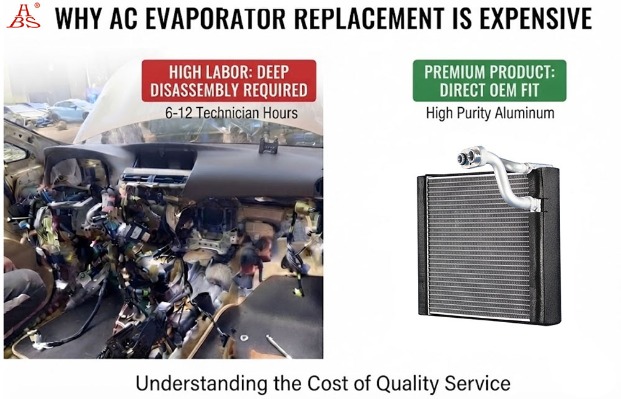
Air Conditioning Evaporator for BYD Seagull
Conclusion
The high cost of replacing a car AC evaporator is fundamentally driven by the complex labor involved in accessing deep-seated components and the absolute necessity of premium product quality. Choosing high-quality, perfectly fitted products from a reputable source factory is the smartest way to lower your total cost of ownership over the vehicle's lifespan.
---
FAQ: Professional Insights
Q1: Why must the refrigerant be drained to replace the evaporator?
A: You cannot skip this. Replacing the evaporator involves opening the sealed refrigeration system. You must first recover the refrigerant, remove the old part, install the new one, and then perform a vacuum cycle to remove air and moisture before recharging the system. This entire professional process is mandatory and cannot be skipped.
Q2: How do you determine if the leak is in the evaporator or another component?
A: Common warning signs include: reduced cooling performance, a quick loss of cooling effect after recharging, or a chemically irritating odor in the cabin. Professional shops typically use electronic leak detectors or inject fluorescent dye into the system and use a UV light for pinpointing. Because the evaporator is buried deep inside the dashboard, we recommend having it tested by a professional shop using specialized equipment.
Q3: Should other components be replaced when replacing the evaporator?
A: We strongly recommend replacing the expansion valve and the receiver drier at the same time. Once the system is opened, humidity enters, and the original desiccant may be saturated or ineffective, leading to internal corrosion. Replacing the expansion valve—a critical component for regulating refrigerant flow—alongside the evaporator prevents the need for another costly disassembly later.
Q4: Why do repair shops recommend replacing the evaporator rather than patching the leak?
A: Evaporator leaks are usually caused by corrosion or fatigue cracks. Aluminum welding is difficult, and the heat-affected zone often loses structural integrity, making the risk of a repeat leak very high after patching. Given the extreme labor cost of accessing the evaporator, if a patch fails, you will be forced to pay the massive labor fees all over again—a classic case of being "penny wise and pound foolish.
Tel : +86-20-36867580
Email : hbs_intl@gz-hbs.com
WhatsApp : +8615920167887
#29, Lingdong Rd.,Auto Base, Huadu District GuangZhou,510820,China


© 2026 HBS AUTO A/C FACTORY
